David Brooks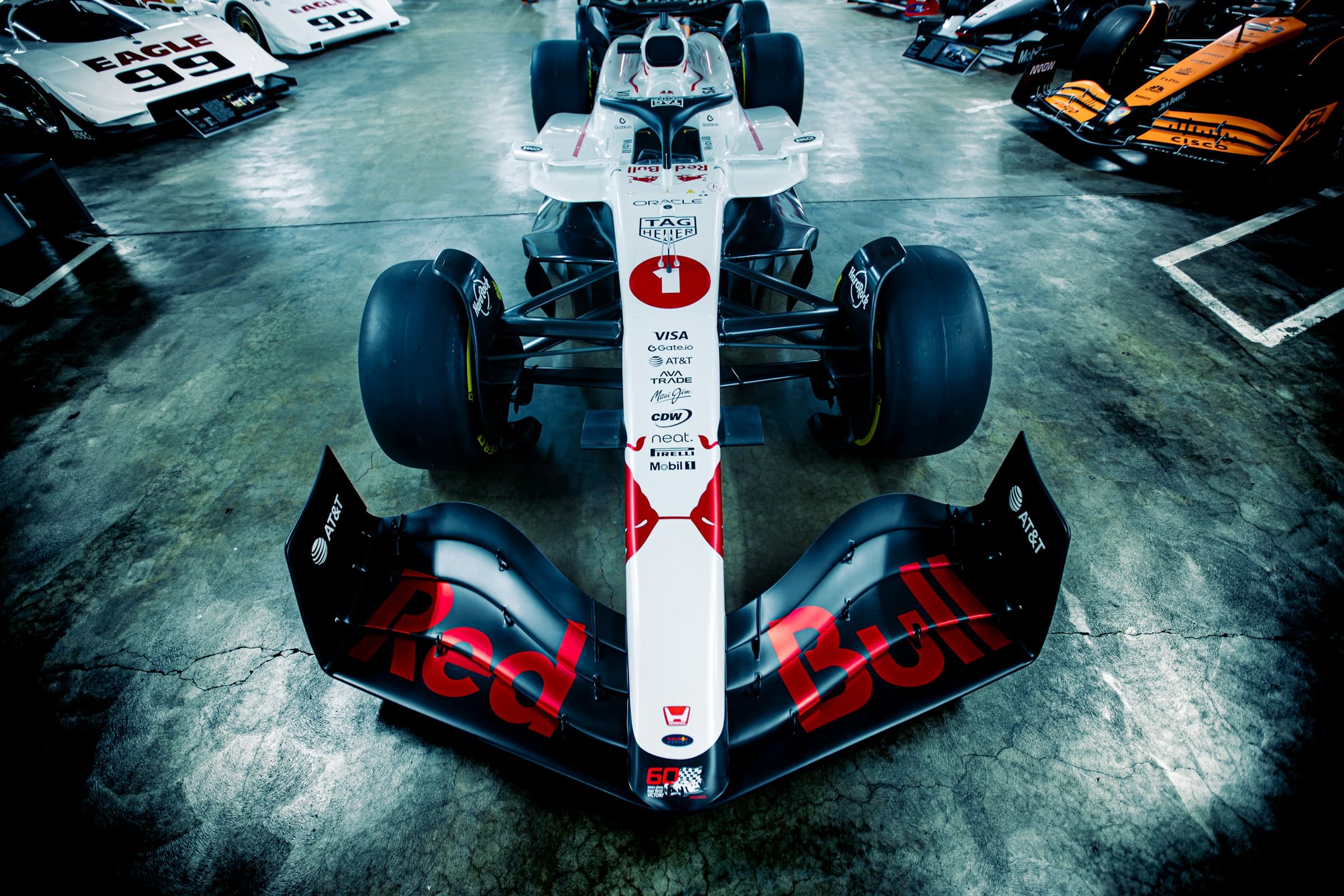
Red Bull bets $54M on tech the FIA already banned once
While everyone's celebrating Adrian Newey's genius and his active DRS concept promising 1.5-2 seconds per lap, nobody's saying the obvious: Red Bull is betting $54 million—40% of their $135M cost cap budget—on a system the FIA banned on May 1, 1994.
Yes, the same day they buried Ayrton Senna after Imola. Article 3.15 of the 1994 technical regulations eliminated any active aerodynamic device overnight. Williams had dominated 1992-1993 with active suspension and adjustable wings. In 1994, all that knowledge was worth zero.
We're looking at one of two scenarios:
Either Newey found a loophole so big the FIA can't close it before June 30, 2026 (technical clarification deadline), or Red Bull's about to burn $54 million on a system that gets declared illegal before the RB22 turns a wheel in Bahrain.
The cost cap makes this bet catastrophic if it fails
According to RaceFans sources, Red Bull's allocating roughly 40% of their 2025-2026 budget to active aero R&D. That's $54 million of the $135 million allowed.
That $54 million is NOT funding:
- Hybrid power unit development (2026 shifts from 30% to 50% electric power)
- Chassis optimization for the new 796kg minimum (30kg lighter than current)
- Simulator improvements and CFD-wind tunnel-track correlation
- Race operations (strategy, pit stops, logistics)
Rob Smedley, former Williams head of performance and current independent consultant, posted on LinkedIn February 10: "Active aero is engineering porn, but the FIA has PTSD from 1994. I'd bet €1 million they ban it before Bahrain testing 2026."
Smedley isn't a hater. He's someone who lived through Williams' post-1994 collapse from the inside.
| Spending Category | Red Bull 2026 (est.) | Ferrari 2026 (est.) | Mercedes 2026 (est.) |
|---|---|---|---|
| Active aero | $54M (40%) | $0 (0%) | $0 (0%) |
| 50% electric hybrid motor | $27M (20%) | $47M (35%) | $54M (40%) |
| Chassis and weight | $27M (20%) | $41M (30%) | $34M (25%) |
| Operations and other | $27M (20%) | $47M (35%) | $47M (35%) |
If the FIA bans active DRS in July 2026, Red Bull will have burned $54 million they can't recover.
Ferrari and Mercedes, meanwhile, will be 6-12 months ahead on engine and chassis development.
The elephant in the room is what happens if this thing gets banned mid-development. In NASCAR, teams that violated the cost cap got penalized with wind tunnel time reductions and fines. In F1, there's no precedent for a team spending 40% of their budget on tech that becomes illegal. Red Bull could find themselves starting 2026 with a chassis from 2024 and an engine from 2023.
Williams 1992-1994: when innovation became worthless overnight
Let me take you back to 1992. Williams unveils the FW14B designed by Adrian Newey (yes, the same one). Active suspension, traction control, adjustable aero. Nigel Mansell wins 9 of the first 11 races. Advantage over second place: 2 seconds per lap.
1993: Alain Prost repeats championship with the FW15C, evolution of the concept. Williams is untouchable.
1994: Imola. Senna dies in the FW16 (version without electronic aids from the 15C, mandated by new regs). FIA bans all active aero with immediate effect. Williams, which had invested millions in R&D, sees their advantage evaporate overnight.
| Year | Car | Active System | Wins | Championship |
|---|---|---|---|---|
| 1992 | FW14B | Suspension + active aero | 10 | Yes (Mansell) |
| 1993 | FW15C | Suspension + active aero | 10 | Yes (Prost) |
| 1994 | FW16 | Banned after Imola | 4 | No (Hill runner-up) |
The difference: in 1992 there was no cost cap. Williams could afford to lose that investment and start from scratch.
Red Bull in 2026 doesn't have that luxury.
Why Ferrari and Mercedes chose the safe route
Why did two teams with budget, talent, and state-of-the-art wind tunnels choose NOT to chase Newey's active DRS?
Ferrari's betting on an active floor (variable ground effect) that adjusts ride height based on speed. Mercedes is evolving their 'zero-pod' philosophy with optimized passive aero. Both concepts are legal under the 2026 regs as written today.
Options:
- They didn't think of it (unlikely with Mike Elliott at Mercedes and Enrico Cardile at Ferrari)
- They evaluated the regulatory risk and decided it wasn't worth it
- They know something about the FIA's position that Red Bull doesn't
I've seen this movie before. Ferrari and Mercedes have institutional memory of 1994. Red Bull Racing was founded in 2005. For them, Imola is ancient history.
For the FIA, it's trauma.
Worth mentioning: Adrian Newey designed the Williams FW14B and FW15C that got banned. He lived through that full cycle—absolute dominance followed by instant regulatory obsolescence. That he's willing to replay this in 2026 says two things: either he has unofficial guarantees from the FIA nobody else has, or his ego is so big he thinks he can force the regulators' hand.
Here's my take: Newey's genius or financial recklessness
I won't deny the technical merit. If the system works as promised, gaining 1.5-2 seconds per lap would be devastating. Max Verstappen with a 2-second advantage isn't competition—it's an exhibition.
But after years covering this circus, Red Bull's playing Russian roulette with the most limited budget they've ever had. In the pre-cost cap era (before 2021), burning $54 million on a canceled project was a bad day at the office. In 2026, it's catastrophic.
The FIA has three options:
- Approve the concept: Red Bull dominates 2026-2028, rest of grid demands emergency regulation change (like Brawn's double diffuser in 2009)
- Ban it before the season: Red Bull loses $54M and arrives at 2026 with engine/chassis development below rivals
- Allow it then ban it mid-season: Total chaos, protests, possible legal challenges
Most likely option is number 2. The FIA can't afford another era of absolute dominance after 2021-2025 Red Bull/Verstappen. The show needs competition. And Imola 1994's shadow is too long.
Newey joins Aston Martin in 2027. If Red Bull's concept fails, he'll design Aston's 2027 car without that baggage. If it works, Aston will copy whatever's legal for 2027. It's a zero-risk bet for Newey personally.
For Red Bull, though, it's all or nothing.
If you ask me directly: all-or-nothing bets rarely work out when there's a regulator with veto power involved. I've covered enough sports leagues to know that when the league office wants to stop something, they find a way. The FIA wrote the rulebook. They can rewrite it. And they will—because the alternative is another half-decade of Red Bull dominance that kills TV ratings and sponsor interest.
Newey's a genius. But even geniuses can't outsmart politics.